
Post-Cycle Blood Work Guide: Which Tests Should You Take? 2026
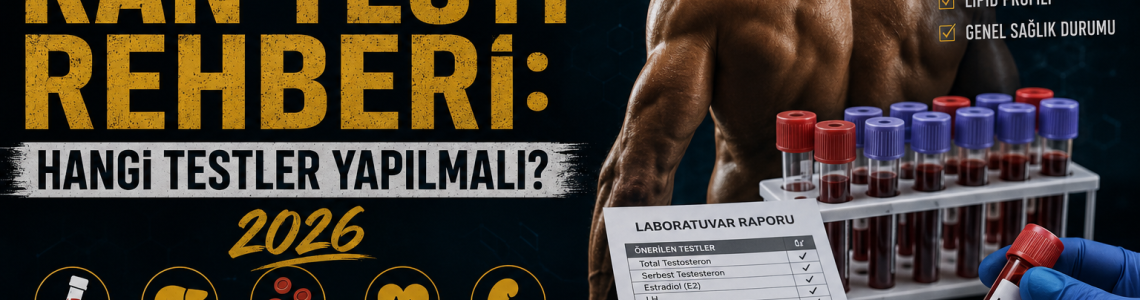
Post-Cycle Blood Work Guide: Which Tests Should You Take? 2026
You've finished your testosterone cycle. You've made solid gains. But now comes the most critical part: post-cycle blood work. The only way to know what happened in your body during the cycle, which values changed, and how your recovery is progressing is through blood tests.
But which tests should you take after a cycle? What values should you look at? What are the normal ranges? In this article, I'll break down the complete post-cycle blood work guide – from which tests to take and normal ranges, to how to interpret the results – in the simplest and most understandable way possible.
Let's dive in.
Why Is Post-Cycle Blood Work Important?
Post-cycle blood work is crucial for protecting your health and tracking your body's recovery process. During a cycle, significant changes occur in your body:
Natural testosterone production is suppressed.
Estrogen levels rise or fall.
Liver enzymes may elevate.
Lipid profiles may worsen.
Blood values (hemoglobin, hematocrit) may change.
Blood work is essential to see how much of these changes have reversed and to detect potential health issues early.
If you don't get blood work:
You won't detect health problems.
You can't track your recovery.
You won't know if PCT was successful.
You can't make informed decisions for future cycles.
When Should You Get Post-Cycle Blood Work?
The timing of blood work depends on the esters you used and your PCT process.
1. Post-Cycle (Before PCT)
Purpose: To see the effects of the cycle on your body.
Timing: 14-18 days after the last injection (for long esters), 3-4 days after (for short esters).
Tests: Hormone panel, liver, kidney, lipid profile, CBC.
2. Post-PCT
Purpose: To check if PCT was successful and if natural testosterone has returned.
Timing: 2-3 weeks after finishing PCT.
Tests: Hormone panel (testosterone, LH, FSH, estradiol), liver, kidney, lipid profile, CBC.
3. 3-Month Post-Cycle Check
Purpose: To monitor long-term recovery.
Timing: 3 months after the end of the cycle.
Tests: Hormone panel, liver, kidney, lipid profile, CBC.
Which Tests Should You Take Post-Cycle?
Here's the complete list of tests you should take after a cycle:
1. Hormone Panel (Most Important)
| Test | Normal Range (Male) | Purpose |
|---|---|---|
| Total Testosterone | 300-1000 ng/dL | Natural testosterone level |
| Free Testosterone | 5-25 ng/dL | Active testosterone level |
| LH (Luteinizing Hormone) | 1.5-9.3 mIU/mL | Pituitary function |
| FSH (Follicle Stimulating Hormone) | 1.4-18.1 mIU/mL | Sperm production |
| Estradiol (E2) | 10-40 pg/mL | Estrogen level |
| Prolactin | 2-18 ng/mL | Prolactin level (for Deca/Tren users) |
| SHBG (Sex Hormone Binding Globulin) | 10-50 nmol/L | Free testosterone calculation |
2. Liver Function Tests
| Test | Normal Range | Purpose |
|---|---|---|
| ALT (Alanine Aminotransferase) | 10-40 U/L | Liver damage |
| AST (Aspartate Aminotransferase) | 10-40 U/L | Liver damage |
| GGT (Gamma Glutamyl Transferase) | 8-60 U/L | Liver damage |
| Bilirubin (Total) | 0.2-1.2 mg/dL | Liver function |
3. Kidney Function Tests
| Test | Normal Range | Purpose |
|---|---|---|
| Creatinine | 0.6-1.2 mg/dL | Kidney function |
| BUN (Blood Urea Nitrogen) | 7-20 mg/dL | Kidney function |
| eGFR (Estimated Glomerular Filtration Rate) | >90 mL/min | Kidney function |
4. Lipid Profile (Cholesterol)
| Test | Normal Range | Purpose |
|---|---|---|
| Total Cholesterol | <200 mg/dL | Cholesterol level |
| HDL (Good Cholesterol) | >40 mg/dL | Heart health |
| LDL (Bad Cholesterol) | <100 mg/dL | Heart health |
| Triglycerides | <150 mg/dL | Heart health |
5. Complete Blood Count (CBC)
| Test | Normal Range | Purpose |
|---|---|---|
| Hemoglobin (Hb) | 13.5-17.5 g/dL | Blood clot risk |
| Hematocrit (Hct) | 38-50% | Blood clot risk |
| Red Blood Cell Count (RBC) | 4.5-5.9 million/µL | Blood clot risk |
6. Thyroid Function Tests (Optional)
| Test | Normal Range | Purpose |
|---|---|---|
| TSH | 0.4-4.0 mIU/L | Thyroid function |
| T3 | 80-200 ng/dL | Thyroid function |
| T4 | 4.5-12.5 µg/dL | Thyroid function |
How to Interpret Post-Cycle Blood Work Results
Testosterone and LH/FSH
High testosterone + low LH: Natural production hasn't started. PCT isn't sufficient.
Low testosterone + low LH: Pituitary is suppressed. Longer PCT needed.
Low testosterone + high LH: Testes aren't responding. Risk of hypogonadism.
Normal testosterone + normal LH: Recovery successful.
Estradiol (E2)
High E2: Check AI dosage. Risk of gynecomastia.
Low E2: Reduce AI dosage. Joint pain, libido loss.
Liver Enzymes (ALT, AST)
High: Liver damage. Use liver support (NAC, TUDCA). Avoid alcohol and fatty foods.
Lipid Profile
Low HDL, high LDL: Cholesterol issues. Omega-3, healthy diet, cardio.
Hemoglobin / Hematocrit
High: Polycythemia risk. Blood donation (phlebotomy) may be needed. Drink plenty of water.
Frequently Asked Questions About Post-Cycle Blood Work
1. Where can I get blood work done?
Public hospitals, private hospitals, medical centers, or online blood testing services.
2. Should I fast before blood work?
Yes, for lipid profile and blood sugar – 8-12 hours fasting. Hormone tests don't require fasting.
3. How many times should I get blood work after a cycle?
At least 2 times: before PCT and after PCT. Ideal: 3 times (before PCT, after PCT, 3-month check).
4. Who should interpret blood work results?
A doctor or specialist. Self-interpretation is risky.
5. How much does blood work cost?
Varies. Typically $50-200 (depending on the number of tests).
6. Is post-cycle blood work mandatory?
Yes, for your health.
7. What if testosterone doesn't return to normal after PCT?
See a doctor. Longer PCT or HCG therapy may be needed.
8. What if liver enzymes are high after the cycle?
Use liver support (NAC, TUDCA). Avoid alcohol and fatty foods. Retest in 1 month.
9. What if cholesterol is abnormal after the cycle?
Omega-3, healthy diet, cardio. Consult a doctor if needed.
10. What if hemoglobin is high after the cycle?
Drink plenty of water. Blood donation (phlebotomy) may be needed. Consult a doctor.
11. Can I start another cycle if blood work isn't normal?
No. Wait until values return to normal.
12. What should I check in post-cycle blood work?
Hormone panel, liver, kidney, lipid profile, CBC.
13. When should I get post-cycle blood work?
Before PCT, after PCT, and 3-month check.
14. How do I read blood work results?
Compare with normal ranges. Discuss abnormal values with a doctor.
15. What happens if I skip post-cycle blood work?
You won't detect health issues. You can't track your recovery.
Final Verdict: Protect Your Health – Get Blood Work Done
Post-cycle blood work is the most important way to protect your health and track your body's recovery. By getting these tests, you can:
Track the return of natural testosterone.
Check liver, kidney, and cholesterol values.
Detect potential health issues early.
Make informed decisions for future cycles.
Remember: Your health comes first. Never skip post-cycle blood work.