
Post-Testosterone Cycle PCT Guide: Clomid or Nolvadex?
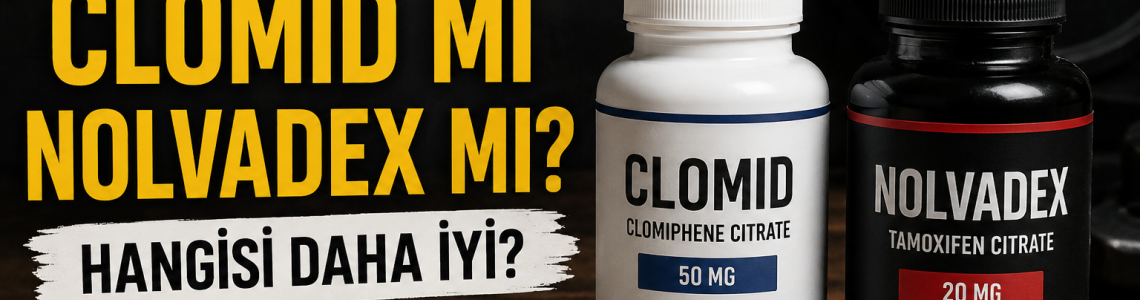
Post-Cycle Therapy (PCT): Clomid vs Nolvadex – Which One Is Better?
You've just finished your testosterone cycle. You made some solid gains. But now comes the most critical part: PCT (Post-Cycle Therapy). If you don't manage this process correctly, you'll lose a large portion of your hard-earned muscle, your energy will crash, your libido will disappear, and you'll sink into depression. In short, PCT is a lifesaver.
So the big question: Clomid or Nolvadex? Which one is more effective? Which has fewer side effects? Should you use both together? In this article, I'll break down everything you need to know about PCT – from what it is, to the differences between Clomid and Nolvadex, dosages, side effects, and protocols.
What Is PCT and Why Is It So Important?
PCT stands for Post-Cycle Therapy. It's the treatment you apply after a steroid or testosterone cycle to restart your body's natural testosterone production. Remember, when you inject testosterone, your body shuts down its own production. The pituitary gland stops secreting LH (Luteinizing Hormone), the testes stop receiving signals, and testosterone production drops to near zero.
When the cycle ends, your body still hasn't started producing testosterone on its own because it was relying on the exogenous source. During this period, your testosterone levels hit rock bottom. This state is called hypogonadism. When this happens:
Muscle mass melts away rapidly
Energy levels plummet
Libido disappears completely
Depression, anxiety, and apathy set in
Sleep patterns get disrupted
Appetite goes out the window
The goal of PCT is to speed up this recovery process and get your body's natural testosterone production back online as quickly and comfortably as possible. If you skip PCT, this low-testosterone phase can drag on for months. That's physically and psychologically devastating.
What Are Clomid and Nolvadex? How Do They Work?
Both drugs belong to the SERM (Selective Estrogen Receptor Modulator) class. They don't completely block estrogen; they only block its effects in specific tissues (like the pituitary and hypothalamus). This tricks the body into thinking "estrogen is low," which prompts the pituitary to increase LH and FSH production. The increased LH then stimulates the testes to restart testosterone production.
But there are important differences between the two.
Clomiphene (Clomid)
Clomid is made up of two isomers: Zuclomifene and Enclomifene. One of these is estrogenic (acts like estrogen), while the other is anti-estrogenic (blocks estrogen). This mixed structure is both an advantage and a disadvantage. The advantage is that it strongly stimulates the pituitary. The disadvantage is that the zuclomifene isomer's estrogenic effects can cause side effects like emotional swings and vision issues.
How Clomid Works:
Blocks estrogen receptors in the hypothalamus and pituitary.
Body senses "low estrogen."
GnRH secretion increases.
LH and FSH secretion increases.
Testes are stimulated.
Testosterone production resumes.
Tamoxifen (Nolvadex)
Nolvadex, on the other hand, is a single isomer and is purely anti-estrogenic. It has no estrogenic effects. This gives it a cleaner side effect profile. However, it's said to be less potent than Clomid at raising LH. Still, Nolvadex is widely used in PCT and is especially effective at preventing and treating gynecomastia.
How Nolvadex Works:
Blocks estrogen receptors in the pituitary.
Body senses "low estrogen."
LH and FSH secretion increases (not as strongly as Clomid, but enough).
Testes are stimulated.
Testosterone production resumes.
Blocks estrogen receptors in breast tissue, preventing/treating gynecomastia.
Clomid vs Nolvadex: Direct Comparison
| Criterion | Clomid | Nolvadex |
|---|---|---|
| Mechanism | Mixed (estrogenic + anti-estrogenic) | Pure anti-estrogenic |
| LH Increase | High (strong) | Moderate (sufficient) |
| Testosterone Increase | High | Moderate-high |
| Gynecomastia Prevention | Weak | Strong |
| Gynecomastia Treatment | Ineffective | Effective |
| Side Effect Profile | More | Less |
| Emotional Side Effects | Common (depression, crying) | Rare |
| Vision Issues | Possible (rare) | None |
| Cost | Cheaper | More expensive |
| Dosing Frequency | Once daily | Once-twice daily |
Which PCT Protocol Is Better?
This is the million-dollar question. Which protocol should you choose? Here are three evidence-based protocols:
Protocol 1: Clomid Only
Duration: 4-6 weeks
Dosage:
Week 1-2: 50 mg/day
Week 3-4: 25 mg/day
(Optional) Week 5-6: 12.5 mg/day
Pros:
Rapidly raises LH and testosterone
Cheaper
Single drug management is simple
Cons:
Emotional side effects (depression, crying spells)
Vision issues (rare but serious)
Doesn't prevent gynecomastia
Best For:
Short, low-dose cycles
Those who can tolerate emotional side effects
Budget-conscious users
Protocol 2: Nolvadex Only
Duration: 4-6 weeks
Dosage:
Week 1-2: 40 mg/day
Week 3-4: 20 mg/day
(Optional) Week 5-6: 10 mg/day
Pros:
Cleaner side effect profile
Prevents and treats gynecomastia
No emotional swings
Cons:
LH increase isn't as strong as Clomid
More expensive
May not be sufficient for some users
Best For:
Those at high risk of gynecomastia
Those who fear emotional side effects
Moderate-long cycles
Protocol 3: Clomid + Nolvadex Combination (Gold Standard)
Duration: 4-6 weeks
Dosage:
Clomid: 50 mg/day (first 2 weeks), 25 mg/day (last 2 weeks)
Nolvadex: 20 mg/day (first 2 weeks), 10 mg/day (last 2 weeks)
Pros:
Both strong LH increase (Clomid) and gynecomastia protection (Nolvadex)
Fastest testosterone recovery
Scientifically most effective protocol
Cons:
Managing two drugs is more complicated
More expensive
Clomid's side effects still present
Best For:
Long, high-dose cycles
Those who want the fastest recovery
Those who want the best possible results
When Should You Start PCT?
PCT start time depends on the ester you used. Here are the general guidelines:
| Ester | Time to Start PCT After Last Injection |
|---|---|
| Testosterone Propionate | 3-4 days |
| Testosterone Enanthate | 10-14 days |
| Testosterone Cypionate | 10-14 days |
| Testosterone Undecanoate | 4-6 weeks |
| Sustanon (blend) | 2-3 weeks |
Why these timelines? Because you need to wait for the exogenous testosterone to clear your system before starting PCT. Otherwise, Clomid/Nolvadex won't work since the pituitary is still suppressed by the exogenous testosterone.
Should You Use HCG During PCT?
NO!
HCG is never used during PCT. HCG stimulates the testes, not the pituitary. In PCT, you need to stimulate the pituitary (with Clomid/Nolvadex). HCG is used at the end of the cycle (the last 2-3 weeks) and stopped when PCT begins.
Side Effects: Clomid vs Nolvadex
Clomid Side Effects
Emotional swings: Depression, crying spells, anger outbursts, anxiety.
Vision issues: Blurred vision, light flashes, floaters (rare but serious – stop immediately if this happens).
Hot flashes: Especially at night.
Nausea: Worse on an empty stomach.
Headaches: Mild to moderate.
Acne: Some users report increased oiliness and breakouts.
Nolvadex Side Effects
Hot flashes: The most common side effect.
Nausea: Less than Clomid.
Headaches: Mild.
Blood clot risk: Rare but serious (with long-term use).
Vision issues: Virtually none.
Bottom line: Clomid has more side effects. Nolvadex is cleaner.
What to Watch Out For During PCT
1. Get Blood Work Done
Get blood work before starting PCT and 2-3 weeks after finishing. Check testosterone, LH, FSH, estradiol, prolactin, hemoglobin, hematocrit, and liver enzymes.
2. Eat Clean and Smart
During PCT, your testosterone is low, so you'll lose some muscle. To minimize this, increase protein intake (2.2 g/kg). Don't go into a calorie deficit – maintain a slight surplus.
3. Reduce Training Intensity
During PCT, your recovery capacity is diminished. Slightly reduce training volume and intensity. Don't drop the weights, just reduce sets.
4. Prioritize Sleep
Most testosterone production happens during sleep. Aim for 7-9 hours of quality sleep per night.
5. Manage Stress
Cortisol is the enemy of testosterone. PCT is already stressful. Use meditation, breathing exercises, or light walks to keep stress in check.
6. Avoid Alcohol and Smoking
Your liver is already busy metabolizing Clomid/Nolvadex. Alcohol and smoking add extra stress.
How Long Does Recovery Take After PCT?
Your testosterone levels won't bounce back to normal immediately after PCT ends. It usually takes 2-3 months for levels to gradually return to baseline. For some, this can take up to 6 months. Be patient.
Get blood work done 2-3 weeks after PCT. If your testosterone is still low (below 300 ng/dL), see a doctor.
Where Clomid Wins vs Nolvadex
Clomid Wins At:
LH and FSH increase: Stronger pituitary stimulation.
Testosterone increase: Faster elevation.
Cost: Cheaper.
Nolvadex Wins At:
Side effect profile: Cleaner, no emotional swings.
Gynecomastia: Both prevents and treats it.
Vision: No vision side effects.
Which Protocol Should You Choose? (Decision Tree)
[How long was your cycle?]
         |
         ▼
   [10-12+ weeks] → [Clomid + Nolvadex Combination]
         |
         ▼
   [6-8 weeks] → [Nolvadex Only] or [Clomid Only]
         |
         ▼
   [Do you have gynecomastia risk?]
    /              \
   /                \
[Yes]           [No]
  |                  |
  ▼                  ▼
[Nolvadex]      [Clomid]
Most Frequently Asked Questions
1. Can I use Clomid and Nolvadex together?
Yes. Many people combine them. The combination is considered the fastest and most effective PCT protocol.
2. Which PCT recovers faster?
Clomid + Nolvadex combination provides the fastest recovery.
3. What happens if I don't do PCT?
Your testosterone stays low for months. You'll experience muscle loss, depression, libido loss, and fatigue. Some users experience permanent hypogonadism.
4. How long should PCT last?
Typically 4-6 weeks. Depending on cycle length and dosage, it can be extended to 8 weeks.
5. Does Clomid cause vision problems?
Rarely. If you experience blurred vision, light flashes, or floaters, stop immediately and see a doctor.
6. Can I burn fat with Nolvadex?
No. Nolvadex isn't a fat burner. Just maintain a clean diet during PCT.
7. Can I use creatine during PCT?
Yes. Creatine helps preserve muscle mass.
8. Can I use testosterone boosters during PCT?
No. The purpose of PCT is to restart natural production. Exogenous testosterone would defeat the purpose.
9. Are Clomid and Nolvadex available over the counter?
No. Both are prescription drugs in most countries.
10. How do I know if PCT worked?
Blood work. When testosterone, LH, and FSH are back to normal ranges, PCT was successful.
11. Can I drink alcohol during PCT?
Not recommended. Your liver is already busy metabolizing Clomid/Nolvadex.
12. Does hair loss stop during PCT?
DHT levels drop, so hair shedding slows or stops.
13. When does libido return during PCT?
As testosterone starts rising, usually around weeks 3-4 of PCT.
14. What time of day should I take Clomid or Nolvadex?
Morning or evening – doesn't matter. If you get nausea, take with food.
15. Can I do cardio during PCT?
Yes. Light cardio is fine. Don't drop weight training – just reduce volume.
16. What's the difference between Clomid and Nolvadex?
Clomid stimulates the pituitary more strongly. Nolvadex prevents gynecomastia and has a cleaner side effect profile.
17. Can I use HCG during PCT?
No. HCG is for the end of the cycle, not during PCT.
18. Do Clomid or Nolvadex cause weight gain?
They can cause water retention, but not permanent weight gain.
19. What if I get depression during PCT?
Clomid can cause emotional sides. Consider switching to Nolvadex. If it persists, see a doctor.
20. When can I start a new cycle after PCT?
After blood work shows full recovery, usually 2-3 months. Recovery time varies per individual.
21. How much do Clomid and Nolvadex cost?
Clomid: ~$20-40, Nolvadex: ~$30-60 per course (varies by country).
22. What other drugs are used in PCT?
HCG (only at the end of the cycle), Aromatase Inhibitors (AI), D-Aspartic Acid, Zinc, Magnesium, Vitamin D.
23. When do testicles return to normal size during PCT?
Usually around weeks 2-4 of PCT.
24. Can Clomid or Nolvadex damage the liver?
At high doses for extended periods, they can elevate liver enzymes. At standard PCT doses (4-6 weeks), they're generally safe.
25. When should I get blood work done after PCT?
2-3 weeks after completing PCT – gives your body time to fully stabilize.
Final Verdict: Clomid or Nolvadex?
Answer: Both are good – for different purposes.
If you want a stronger, faster LH increase → Clomid
If you're at risk for gynecomastia or want a cleaner side effect profile → Nolvadex
If you want the best possible results → Clomid + Nolvadex combination
My personal recommendation: If you ran a long cycle (12+ weeks), use the Clomid + Nolvadex combination. For a short cycle (6-8 weeks), Nolvadex only should suffice.
Never forget: PCT is just as important as the cycle itself. Don't take it lightly. Never start or end PCT without blood work. Your health comes first.