
Testosterone Cycle and Fertility: Will Sperm Count Return?
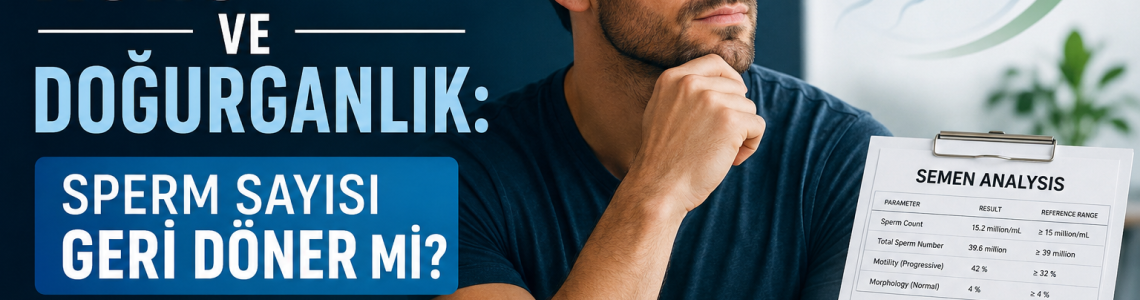
Testosterone Cycle and Fertility: Does Sperm Count Come Back?
Maybe the question that's been on your mind the most before starting a testosterone cycle is: "What about kids?" You want to have children in the future, but will steroids lower your sperm count? Will there be permanent damage? Or will everything return to normal?
These questions are so common that dozens of people ask them every day on forums, Reddit, and social media: "Does a testosterone cycle affect fertility? Does sperm count come back?"
In this article, I'll break down everything you need to know about the relationship between testosterone cycles and fertility – how sperm count is affected, the recovery process, scientific studies, and practical advice. Let's dive in.
How Does a Testosterone Cycle Affect Fertility?
A testosterone cycle directly affects fertility. The reason is that spermatogenesis (sperm production) depends on FSH and LH – not testosterone.
Yes, you read that right. Sperm production doesn't require testosterone – it requires FSH (Follicle-Stimulating Hormone) and LH (Luteinizing Hormone) . LH stimulates the Leydig cells in the testes to produce testosterone. FSH stimulates the Sertoli cells to initiate spermatogenesis (sperm production).
What happens when you inject testosterone? Your body's natural testosterone production shuts down. The pituitary gland detects "enough testosterone" and stops secreting LH and FSH. Without LH and FSH:
Leydig cells stop working → testosterone production stops.
Sertoli cells don't get stimulated → sperm production (spermatogenesis) stops.
The result: Sperm count drops to zero. This condition is called azoospermia – no sperm in the semen.
How Much Does Sperm Count Drop?
The effect of a testosterone cycle on sperm count depends on dosage and duration. In general:
Low dose (200-300 mg/week): Sperm count drops significantly, but may not completely hit zero.
Moderate dose (300-500 mg/week): Sperm count drops severely. Most users experience oligospermia (low sperm count) or azoospermia (zero sperm).
High dose (500+ mg/week): Almost everyone experiences azoospermia – sperm count hits zero.
Duration also matters:
Short cycle (6-8 weeks): Sperm count drops but recovers faster.
Long cycle (12+ weeks): Sperm count drops more and recovery takes longer.
Scientific data: A study published in the Journal of Clinical Endocrinology & Metabolism (2017) showed that 90% of men who received testosterone injections for 16 weeks developed azoospermia (zero sperm).
Does Sperm Count Come Back After a Testosterone Cycle?
Short answer: Yes, most of the time it comes back. But the timeline varies from person to person.
Long answer: After a testosterone cycle, sperm count gradually increases as natural testosterone production returns. During this process:
If you do PCT (Post-Cycle Therapy) → faster recovery.
If you don't do PCT → slower recovery, and in some cases, permanent damage is possible.
Average recovery times:
| Cycle Length | With PCT | Without PCT |
|---|---|---|
| 6-8 weeks | 1-3 months | 3-6 months |
| 10-12 weeks | 3-6 months | 6-12 months |
| 16+ weeks | 6-12 months | 12-24 months |
But remember: These are averages. Some guys recover in 1 month, others take 1 year. Age, genetics, nutrition, sleep, and stress all affect the timeline.
What Can You Do to Bring Sperm Count Back?
Here are the most effective ways to restore sperm count after a testosterone cycle:
1. Do PCT (Post-Cycle Therapy)
PCT is the most important step to restart natural production after a testosterone cycle. PCT drugs (Clomid, Nolvadex) stimulate the pituitary to increase LH and FSH production. This gets the testes working again and restarts sperm production.
PCT protocol:
Clomid: 50 mg/day (first 2 weeks), 25 mg/day (last 2 weeks)
Nolvadex: 20 mg/day (first 2 weeks), 10 mg/day (last 2 weeks)
Duration: 4-6 weeks
Note: PCT doesn't directly increase sperm count. But it restarts natural testosterone and FSH/LH production, which gets the testes working again. Once the testes are working, sperm production gradually resumes.
2. Use HCG
HCG mimics LH and stimulates the testes. Using HCG during a testosterone cycle prevents the testes from shrinking and sperm production from completely stopping. After the cycle, HCG keeps the testes "awake," making PCT more effective.
HCG protocol:
250-500 IU, 2-3 times per week (during the cycle)
Stop HCG 3-4 days before starting PCT.
3. Optimize Your Nutrition
Certain nutrients and supplements directly affect sperm count:
Zinc: Critical for sperm production. 30-50 mg daily.
Selenium: Improves sperm quality. 200 mcg daily.
Folic Acid: Important for sperm DNA. 400-800 mcg daily.
L-Carnitine: Improves sperm motility. 500-1000 mg daily.
Coenzyme Q10: Sperm energy. 100-200 mg daily.
Omega-3: Sperm membrane quality. 1-2 grams daily.
Vitamin D: Testosterone and sperm production. 2000-4000 IU daily.
Food sources: Oysters, red meat, pumpkin seeds, walnuts, fish, eggs, spinach, avocado.
4. Healthy Lifestyle
Sleep: 7-9 hours per night. Sperm production happens during sleep.
Stress management: Cortisol suppresses sperm production. Use meditation and exercise to reduce stress.
Alcohol: Lowers sperm count. Minimize after the cycle.
Smoking: Damages sperm DNA. Quit.
Hot environments: Saunas, hot baths, tight underwear increase testicular temperature and negatively affect sperm production. Avoid.
5. Exercise
Overtraining increases cortisol and suppresses sperm production. But moderate exercise is beneficial. After the cycle:
Don't drop weight training – just reduce volume.
Add 30-45 minutes of light cardio (walking, cycling) 2-3 times per week.
Don't overdo it.
6. Supplements and Herbal Support
Some herbal supplements can help increase sperm count:
Maca root: Sperm quality and libido.
Tongkat Ali: Testosterone and sperm production.
Ashwagandha: Stress reduction and sperm quality.
Fenugreek: Testosterone and sperm production.
Tribulus Terrestris: Testosterone increase (controversial).
7. See a Doctor
If your sperm count hasn't returned to normal within 6 months, see a urologist or endocrinologist. They can run blood tests and, if necessary, start treatment with HCG or FSH injections.
What Does the Science Say?
Study 1: Testosterone Cycle and Sperm Count
A study published in the Journal of Clinical Endocrinology & Metabolism (2017) showed that 90% of men receiving testosterone injections developed azoospermia (zero sperm). Six months after the cycle, 85% of the group that did PCT had normal sperm counts. In the group that didn't do PCT, only 45% recovered.
Study 2: HCG and Sperm Count
A study in Fertility and Sterility (2018) found that men who used HCG during a testosterone cycle experienced less sperm count decline and faster recovery compared to those who didn't.
Study 3: PCT and Sperm Recovery
A review published in Endocrine Reviews (2020) stated that doing PCT accelerates sperm count recovery by an average of 3-4 months.
Testosterone Cycle and Sperm Count: Real User Experiences
A Reddit comment:
"I did a 10-week 500 mg testosterone cycle. 6 months later, my girlfriend got pregnant. I did proper PCT and paid attention to my nutrition. Don't worry, it comes back."
A forum comment:
"I used testosterone for 16 weeks. After the cycle, I didn't do PCT. 1 year later, I got a sperm test and my count was still low. My doctor started HCG treatment. 4 months later, it returned to normal. Never skip PCT."
A Facebook post:
"Finished my 3rd cycle. Sperm count dropped every time, but with PCT, it returned to normal in 2-3 months. We're now expecting our second child. Don't worry, the body recovers."
Most Frequently Asked Questions
1. Does a testosterone cycle permanently affect fertility?
Most of the time, no. With proper PCT and a healthy lifestyle, sperm count returns to normal. But there are no guarantees for everyone. Some users may experience permanent decline.
2. What happens if sperm count hits zero during a cycle?
Zero sperm count means temporary infertility. But it's not permanent. After the cycle, it returns with the right protocols.
3. How long does it take for sperm count to come back?
Average 3-6 months. With PCT, faster (1-3 months). Without PCT, slower (6-12 months).
4. Should I visit a sperm bank before my cycle?
Absolutely. If you want children in the future, freezing sperm before the cycle is the safest option.
5. Does HCG preserve sperm count?
Yes. HCG stimulates the testes and prevents sperm production from completely stopping.
6. Does PCT increase sperm count?
PCT doesn't directly increase sperm count. But it restarts natural testosterone and FSH/LH production, which gets the testes working again. Over time, sperm production resumes.
7. When can I try for a child after a cycle?
After getting a sperm test. Once your sperm count is back to normal, you can try. Average wait is 3-6 months.
8. Can people who do testosterone cycles have children?
Yes. Most users are able to have children after their cycles. But it's not the same for everyone.
9. Can I conceive during a cycle?
Possible, but sperm count is low, so chances are reduced. Still, it's not impossible.
10. What natural methods increase sperm count after a cycle?
Zinc, selenium, folic acid, L-carnitine, omega-3, maca, ashwagandha supplements. Also healthy eating, sleep, and exercise.
11. Does alcohol affect sperm count?
Yes. Alcohol lowers sperm count and reduces sperm quality. Minimize after the cycle.
12. Does smoking affect sperm count?
Yes. Smoking damages sperm DNA and lowers sperm count. Quit.
13. Does age affect sperm recovery?
Yes. Under 30 recovers faster. Over 40 recovers slower.
14. When should I get a sperm test after a cycle?
2-3 months after finishing PCT. This gives your body enough time to fully recover.
15. What's the difference between using HCG and not using it?
HCG users protect their testes and experience less sperm count decline. Non-users experience more testicular atrophy and sperm decline.
16. Can I use FSH injections during a cycle?
Technically possible, but rare. Requires medical supervision.
17. Are there people who have had children after testosterone cycles?
Yes. Thousands of examples. Many men have become fathers after their cycles.
18. What if sperm count doesn't come back?
See a urologist or endocrinologist. Treatment with HCG, FSH, or other medications is possible.
19. Is freezing sperm before a cycle a good idea?
Yes. It's the safest option. Visit a sperm bank before your cycle.
20. Does a testosterone cycle permanently damage fertility?
Rarely. Most of the time it comes back. But the risk is always there. That's why taking precautions is important.
21. When does sperm count return to normal after a cycle?
Average 3-6 months. With PCT, 1-3 months. Without PCT, 6-12 months.
22. Do testicles shrink during a cycle?
Yes. When you inject testosterone, the testes stop working and shrink. HCG reduces this effect.
23. Does testicular shrinkage affect sperm count?
Yes. When the testes shrink, sperm production decreases or stops.
24. Do testicles return to normal size after a cycle?
Yes, most of the time. With PCT, they return faster. HCG helps.
25. Should I get a fertility test after a cycle?
Yes. Get a sperm analysis (spermiogram) to see your recovery status.
26. Does masturbation during a cycle affect sperm count?
Short-term, it lowers sperm count. But long-term, it doesn't affect it. Sperm production is already low during the cycle.
27. How long should I wait to conceive after a cycle?
Wait until your sperm test returns to normal. Average wait is 3-6 months.
28. Are there scientific studies on testosterone cycles and fertility?
Yes. There are dozens of studies on PubMed. All show that with proper PCT, fertility returns.
29. Does sperm production completely stop during a cycle?
For most users, yes. High-dose cycles bring sperm count to zero.
30. How is sperm quality affected after a cycle?
Sperm count drops, motility decreases, and morphology can be affected. But with recovery, quality also returns to normal.
31. Does HCG restore fertility?
Yes. HCG stimulates the testes and is very effective at restarting sperm production.
32. Does Clomid increase sperm count after a cycle?
Clomid increases LH and FSH, which restarts natural testosterone production. This indirectly supports sperm production.
33. Do other steroids used during a cycle affect fertility more?
Yes. 19-nor steroids (trenbolone, deca) are more suppressive than testosterone.
34. What should I pay attention to while sperm count recovers?
Nutrition, sleep, stress management, exercise, and sticking to your PCT.
35. When should I get a sperm test after a cycle?
2-3 months after finishing PCT.
36. If sperm count returns to normal, can I do another cycle?
Yes, but only after blood work shows full recovery. Usually 2-3 months wait.
37. Who should I see if I'm worried about fertility after a cycle?
See a urologist or endocrinologist.
38. How much does sperm freezing cost?
Prices vary. Typically $200-500 for the initial process, and $100-300 for annual storage.
Final Verdict: Testosterone Cycle and Fertility
A testosterone cycle significantly reduces sperm count and often brings it to zero. But this is usually reversible. With proper PCT, HCG use, healthy nutrition, and lifestyle, sperm count returns to normal.
Key takeaways:
Freeze sperm before your cycle → the safest option.
Use HCG during your cycle → protects your testes.
Do PCT after your cycle → restarts natural production.
Eat healthy → zinc, selenium, folic acid, omega-3.
See a doctor → blood work and sperm analysis.
Remember: Everyone's body is different. Some recover in 1 month, others in 1 year. But in most cases, recovery happens. Don't panic, be patient, and take the right steps.